





Broken Tooth Emergency: Immediate Steps for New West Residents
A broken tooth can happen in seconds. You might bite down on something hard, take an unexpected fall, get hit in the mouth during a sports game, or experience an accident at work or on the road.
Whatever caused the injury, knowing what to do next can help protect your tooth, reduce discomfort, and prevent further damage.
If you are experiencing a broken tooth emergency in New Westminster, Columbia Square Dental can help assess the damage and determine the appropriate next steps. Even if the tooth does not hurt, it is important to have it examined because cracks and fractures can expose the inner layers of the tooth and increase the risk of infection.
Here is what to do immediately after breaking a tooth, including what to know about workplace injuries, ICBC claims, and sports-related dental accidents.
1. What Should You Do Immediately After Breaking a Tooth?
The first few minutes after a dental injury matter. Follow these steps while arranging a dental assessment.
Step 1: Rinse your mouth gently.
Use lukewarm water to remove blood, dirt, and loose debris. Avoid vigorous rinsing if the area is bleeding or painful.
Step 2: Control any bleeding.
Apply gentle pressure with clean gauze to the affected area. If bleeding is heavy or will not stop, seek urgent medical care.
Step 3: Save any broken pieces.
If you can find the broken piece of your tooth, place it in a clean container with milk or your own saliva. Bring it to your dental appointment. Your dentist can determine whether the fragment can be reattached.
Step 4: Reduce swelling.
Apply a cold compress to the outside of your cheek for short intervals. Do not place ice directly against the tooth or gums.
Step 5: Protect the tooth.
Avoid chewing on the injured side. Stick to soft foods and avoid very hot, cold, sweet, or hard foods if they trigger sensitivity. If the broken edge is sharp, dental wax can temporarily cover it.
Step 6: Contact a dentist promptly.
Do not wait for pain to develop. A small chip may need a simple repair, while a deeper fracture may require more extensive treatment.
If you have difficulty breathing or swallowing, severe facial trauma, uncontrolled bleeding, or a suspected jaw fracture, seek emergency medical care immediately by going to your nearest hospital or calling 9-1-1.
2. How Serious Is a Broken Tooth?
Not every broken tooth requires the same treatment. The extent of the damage, the location of the fracture, and whether the tooth’s nerve is affected will determine what happens next.

A small piece of enamel has broken away. Treatment may involve smoothing the edge, bonding tooth-coloured material, or another cosmetic repair.
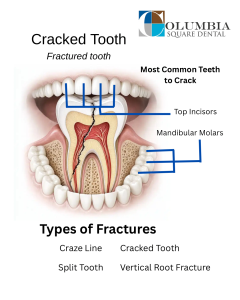

A deeper break may expose the pulp, causing significant pain or bleeding from the centre of the tooth. Root canal treatment and a crown may be needed, although some injuries require other treatment.

Knocked-out permanent tooth
This is a time-critical dental emergency. Handle the tooth by the crown, not the root. If it is dirty, rinse it gently without scrubbing. If possible, place it back in its socket without forcing it; otherwise, keep it in milk or a suitable tooth-preservation solution and seek immediate dental care. Do not reimplant a baby tooth.
A dental examination and, when indicated, X-rays can help determine whether the root, surrounding bone, or tooth nerve has been affected.
3. Broken Tooth at Work? What New Westminster Employees Should Know About WCB
A workplace accident can damage a tooth in many ways. You might be struck by equipment, fall on a hard surface, suffer an impact while handling materials, or sustain a facial injury during a work-related incident.
If your tooth breaks at work in British Columbia, take these steps:
-
Get the injury assessed. Arrange dental care promptly, and seek medical attention first if you have a serious facial injury or possible head trauma.
-
Notify your employer. Report what happened as soon as it is safe to do so.
-
Report the workplace injury to WorkSafeBC. Provide details about the incident and follow the claims process.
-
Keep your records. Save the date and details of the accident, photographs of the damage, dental assessments, treatment plans, and receipts.
-
Ask about authorization before treatment. WorkSafeBC may cover dental repairs for accepted workplace injuries, but approval requirements apply to many treatments. Emergency situations have separate procedures. Confirm the requirements for your claim before proceeding when possible.
WorkSafeBC explains that it may cover dental services when a worker’s teeth or dentures are damaged on the job. Coverage depends on the claim and applicable authorization requirements.
Important: If you have a dental emergency, do not delay necessary care simply because you are uncertain about the claim process. Tell the dental office that the injury happened at work and contact WorkSafeBC for guidance on authorization and payment.
4. Broke a Tooth in a Car Accident? Understanding ICBC Dental Claims
A broken tooth can occur when your face strikes the steering wheel, dashboard, window, or another surface during a motor vehicle collision. Even a collision that initially seems minor can cause damage to teeth, roots, and surrounding structures.
If your dental injury occurred in a car accident in British Columbia, here is what to do.
-
Seek prompt dental care. Have the affected tooth examined, even if the pain seems manageable.
-
Report the collision to ICBC. Follow the applicable claims process and retain your claim number.
-
Tell your dentist the injury is accident-related. Explain how the collision occurred and identify the teeth affected.
-
Keep treatment documentation. Save your dental records, treatment recommendations, estimates, invoices, and receipts.
-
Confirm coverage and pre-authorization. Ask ICBC or your assigned claims representative which dental treatments are eligible and whether additional treatment must be approved.
ICBC’s Enhanced Accident Benefits information states that emergency dental work immediately after a crash does not require pre-authorization, while additional dental treatment may require it. Dental coverage is also secondary to other dental coverage you may have access to, so confirm how your specific claim will be handled.
If you were injured in a collision while working, WorkSafeBC may be your primary insurer, with ICBC potentially providing secondary coverage for eligible expenses.
Do not assume that every repair will automatically be covered. Your eligibility, treatment plan, and applicable claim requirements will determine the next steps.
5. Sports Accidents: What to Do When a Tooth Breaks During a Game
Sports-related dental injuries can happen during hockey, basketball, soccer, martial arts, cycling, skateboarding, and recreational activities. A ball, stick, elbow, fall, or collision can chip a tooth, fracture it deeply, or knock it completely out.
If you or your child experiences a dental injury during sports:
-
Stop playing immediately and assess the injury.
-
Check for possible concussion, jaw injury, or other facial trauma. Seek medical assessment if indicated.
-
Rinse the mouth gently with water.
-
Apply a cold compress to the outside of the face.
-
Save any broken tooth fragments.
-
Contact a dentist promptly, particularly if the tooth is loose, displaced, deeply fractured, or knocked out.
What if a permanent tooth gets knocked out during sports?
Time is critical. Handle the tooth by its crown, avoid touching the root, and keep it moist. If it is clean and can be repositioned easily, gently place it back in its socket without forcing it. Otherwise, store it in milk or a suitable tooth-preservation solution and get immediate dental care. Do not attempt to reinsert a baby tooth.
For a knocked-out permanent tooth, the British Columbia Dental Association recommends seeking care immediately; treatment within approximately an hour can make a major difference in the chance of saving it.
Can a sports-related dental injury be covered by insurance?
Possibly. Coverage depends on the circumstances, the insurance policy, and whether an applicable workplace or other injury claim exists. If the accident occurred during paid employment or a work-related activity, ask whether WorkSafeBC applies. For recreational sports, check any applicable private, school, club, or sports association coverage.
Keep the details of the incident and your treatment records. If you are unsure about coverage, confirm it with your insurer before assuming a procedure will be reimbursed.
6. When Should You Seek Emergency Dental Care?
Not every chipped tooth requires a hospital visit, but some dental injuries need immediate attention.
| Symptom or injury | What to do |
|---|---|
| Small chip with no pain | Contact your dentist for advice and an appointment. |
| Deep crack, significant pain, or exposed inner tooth | Seek urgent dental assessment. |
| Loose or displaced tooth after an impact | Seek prompt dental care. |
| Permanent tooth knocked out | Seek immediate dental care; act as quickly as possible. |
| Facial swelling with fever or signs of spreading infection | Seek urgent medical or dental assessment. |
| Difficulty breathing or swallowing, severe facial trauma, or uncontrolled bleeding | Call 911 or go to an emergency department as appropriate. |
If a blow to the face causes possible head trauma, loss of consciousness, confusion, or other concerning symptoms, prioritize emergency medical assessment. Dental treatment can follow once serious injuries have been addressed.
The BC Dental Association provides further guidance on common dental emergencies and when urgent medical care is necessary.
7. How Does a Dentist Repair a Broken Tooth?
The right treatment depends on how much of the tooth has broken off and whether the root or pulp has been damaged.
Your dentist may recommend:
-
Dental bonding: Tooth-coloured material to repair certain small chips and fractures.
-
A filling: To restore a damaged area when appropriate.
-
A dental crown: To protect a tooth with more extensive structural damage.
-
Root canal treatment: When the tooth’s pulp is irreversibly damaged or infected and the tooth can be saved.
-
Repositioning or stabilizing a tooth: For certain injuries involving displaced or loosened teeth.
-
Extraction: When a tooth cannot be predictably restored or saved.
In some cases, treatment occurs in stages. The first appointment may focus on stabilizing the tooth, relieving symptoms, and protecting it from further damage. Definitive treatment may follow after the full extent of the injury is understood.
Your dentist will explain the findings, treatment options, expected costs, and any necessary follow-up.
8. Can You Prevent a Broken Tooth?
Accidents are not always avoidable, but a few precautions can lower your risk of dental injuries.
-
Wear a properly fitted mouthguard for contact sports and activities with a risk of facial impact.
-
Avoid chewing ice or hard objects that can fracture teeth.
-
Never use your teeth as tools to open packages or bite through objects.
-
Address existing dental problems. Large fillings, weakened teeth, and untreated cracks may make teeth more vulnerable to fracture.
-
Wear a seat belt and use appropriate protective equipment during sports and recreational activities.
Custom-fitted sports mouthguards can be especially helpful for athletes who regularly participate in activities with a risk of dental trauma.
9. Where Can New Westminster Residents Get Help for a Broken Tooth?
When a tooth breaks, it can be difficult to know how serious the damage is or whether you need treatment immediately. Getting professional advice early helps you understand the injury and avoid unnecessary delays.
At Columbia Square Dental in New Westminster, our team can assess your dental concerns, explain appropriate treatment options, and help you understand the next steps after an unexpected dental injury.
Whether your tooth was damaged while eating, during a sports accident, at work, or in a motor vehicle collision, let us know how the injury occurred. This information can help guide your assessment and may be important for insurance documentation.
Our office is conveniently located near Columbia SkyTrain Station, making it accessible for many New Westminster residents and people commuting through the area.
Contact Columbia Square Dental to discuss your broken tooth and arrange an assessment. If you have severe symptoms, a knocked-out permanent tooth, or significant facial trauma, seek urgent care rather than waiting for a routine appointment.
Frequently Asked Questions
Is a broken tooth always a dental emergency?
No. A small chip without pain may not require emergency treatment, but you should contact your dentist for advice. Deep fractures, significant pain, loose teeth, and knocked-out permanent teeth need prompt or immediate assessment.
Can a broken tooth heal on its own?
No. Enamel and dentin do not regenerate to repair a fracture. A small chip may need minimal treatment, but a dentist should assess the damage to determine whether repair is necessary.
Will WCB pay to fix a broken tooth at work?
WorkSafeBC may cover eligible dental repairs resulting from an accepted workplace injury. Coverage and authorization requirements depend on the claim and treatment. Report the incident and confirm the process with WorkSafeBC.
Does ICBC cover a broken tooth after a car accident?
Eligible dental treatment may be covered under ICBC accident benefits, subject to the applicable rules, other available dental coverage, and any required authorization. Confirm your specific eligibility with your claims representative.
What should I do if my child breaks a tooth playing sports?
Stop the activity, check for other injuries, and contact a dentist promptly. Save any tooth fragments. If a permanent tooth has been knocked out, seek immediate dental care. Never reinsert a baby tooth.
Should I wait until my broken tooth starts hurting?
No. A fracture can damage the tooth even when symptoms are mild or absent. Prompt assessment can help identify the injury and determine whether treatment is needed.